by admin | Jun 16, 2011 | Greater New Orleans
6:15 a.m. and both kids were up and rearing to go. Charles was pulling on his shoes while asking me in the sweetest toddler voice possible, “Mommy, can we go on an adventure today?” August squealed in agreement. I checked the temperature, and it was already 80 degrees out and rising rapidly.
Over bowls of cereal, we struggled with our obvious dilemma–where could we go that was outside the city yet close enough to explore before the afternoon heat fried us all. “How about Camp Salmen?” Paul suggested, and off we went across the lake toward Slidell.
 |
| One of countless grasshoppers |
Home to boy scouts for nearly 60 years, Camp Salmen was later acquired by St. Tammany Parish and is undergoing a transformation into a nature park. As we stepped out into the baking heat, scenic Bayou Liberty beckoned us over to its cooling waters.
With every step we took forward, the ground seemed to come alive around us. Enormous grasshoppers circled our feet, and Charles thought we had brought him to Heaven. Overcome with both fear and excitement, he was shaking each time he reached his small fingers down to catch another one. Before we knew it, we had a Ziploc bag full of the black and red-striped insects.
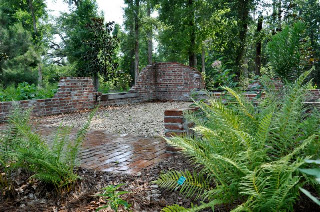 |
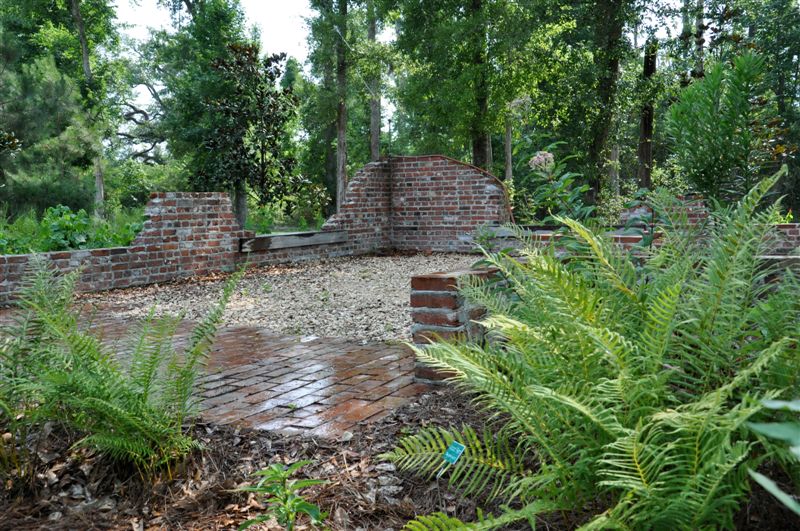
| Garden designed around Camp Salmen ruins |
The poor critters were carried on a tour across the property, from the boardwalk by the bayou to the garden-bed ruins. We made it through two separate trails before succumbing to the heat and running through a nearby sprinkler while retreating to the car. Our tour was enough to show that the parish has great plans for this work-in-progress park, which promises to be one of the most scenic sites in St. Tammany.
After a quick detour to the Dollar Store to buy another bug catcher, we stopped off in Old Towne Slidell for a burger and fried pickles at the Times Grill. The restaurant is located on Front Street, which runs along Bayou Bonfouca. Old Towne houses several antique shops, clothing stores and Heritage Park with its playground, walking paths and boat launch.
For the more adventuresome, Slidell is also the launching site for tours of Honey Island Swamp and The Nature Conservancy’s White Kitchen Preserve. Skipping the swamp tour for today, we did swing by The Nature Conservancy site where a short boardwalk offered a peak into the area’s wetlands as well as a chance to see a bald eagle nest.

by admin | Jun 3, 2011 | Cajun Country
Amidst all the flooding concerns of late, towns in the path of the Morganza Spillway have garnered a lot of attention–including ours. Like all those people seen perched on the edge of the Bonnet Carre, we wanted to be part of the action, but certainly not too close. Houma seemed like a reasonable compromise, with homes sandbagged and lined with Tiger Dam, but actually no water in sight.
 |
| Southdown Plantation |
On the relatively quick drive down, I pulled out our guidebooks and started mapping out the day. Houma’s most famous landmark appeared to be Southdown Plantation, a pink and green, 19th century manor house that stands as a monument to the once booming sugar industry in Terrebonne Parish. Today the mansion is home to the Terrebonne Museum of history, culture and arts, as well as musician Tab Benoit’s Voice of the Wetlands festival every October. We’ve learned not to even attempt taking the kids on a house tour, but we did stretch our legs by walking the expansive yard, still searching for a cicada for Charles’ bug catcher.
Lunch at The French Loaf offered possibly the best poboys we’ve ever tasted–lightly fried seafood and fluffy, crisp bread. It was by chance that we stopped here, driving along Park Ave. searching for food. I even had second thoughts about going inside the non-descript, wooden shack, but I’m certainly glad we did.
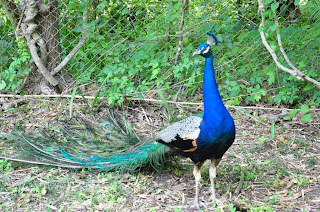 |
| Peacock at Wildlife Gardens |
Rejuvenated and ready to pick up our tour again, we drove Little Bayou Black Road, looking for more plantations and enjoying the rural scenery. Taking a detour onto Bull Run Road, we saw several people boarding a boat at Munson’s Swamp Tours and passed the entrance to Bois d’Arc Gardens, an iris garden open in March and April to visitors.
Looping around onto Bayou Black Road, we were headed to the Wildlife Gardens for a walking tour through a cypress swamp. We were expecting a more prominent entrance than the rustic signs pointing the way and a closed-up shop. Despite being a bed and breakfast, the gardens were empty of any humans, but several colorful peacocks beckoned us inside. A trail overtaken by large spiders led us past several cabins and around a small pond.
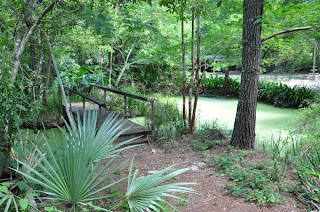 |
| Trail through Wildlife Gardens |
After running into dead ends over several bridges, we were about to turn back when we spotted an enormous alligator inside a short, wire cage. Intimidated by the lack of protection separating us, we kept our distance while following the path around what turned out to be an alligator farm. Several more gators, each larger than the last, lay eerily still within the fencing, although we could feel them following us with their eyes. A trapper’s cabin stood at the far end of the trail, and a separate cage held more than a dozen frisky, hissing juvenile gators.
The hair on my neck rose as I finally realized we were carrying two small children, surrounded by these fierce creatures on a dark, wooded property that we were possibly trespassing on. Paul snapped one last picture, and we nearly ran out of the area, breathing a sigh of relief as we reached our car and the peacock perched in the tree above us.
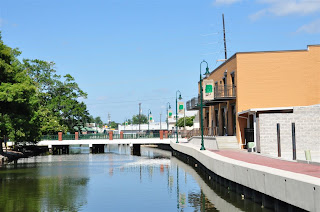 |
| Walking path and bridges along Bayou Terrebonne |
The rest of Bayou Black Road was tranquil and relaxing, and we made one last stop for a short hike at Mandalay National Wildlife Refuge before heading back into town. The day had become a scorcher and the kids were overdue for a nap, but I wanted to see the nicely landscaped park in front of the parish courthouse and the elegant path along Bayou Terrebonne. To complete the day, we picked up a basket of peaches from one of the fruit stands lining the road, dreaming of the peach and blueberry cobbler they soon would become.

by admin | May 31, 2011 | Greater New Orleans
I’ll admit it, I’m a map junkie. Everyone nowadays has GPS in their cars or on their iphone, but I love the feel of an actual map in my hands. Sometimes when I’m bored, I’ll just pick up a map and start looking it over, searching for something I’ve never seen before. That’s how I first came across A Studio in the Woods, a tiny dot on a road I never knew existed.
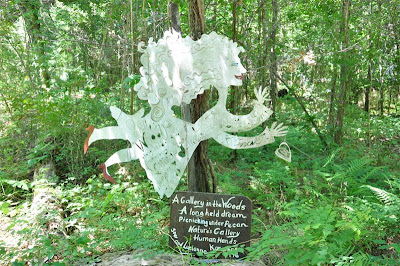 |
| A work of art greets visitors to A Studio in the Woods. |
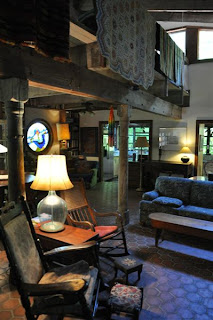 |
| Inside the Main House |
A quick Google search and I discovered an artist retreat hidden in 7.6 acres of forest. I quickly joined their mailing list and waited for an invitation to visit. The chance came with their 2nd Annual FORESTival in mid-May, when the front gates and doors to their homes were opened wide to visitors. The mini-festival, complete with music, fish tacos and children’s activities, was secondary to the real reason we visited — to see the house and studios and take a hike through one of the forest trails.
The main house, mostly built of reclaimed wood, was beautiful and eclectic at the same time. The cozy cabin feel of its initial core took on a disheveled look as assorted rooms were added in later years. Our time spent inside was cut short by two squirming kids, though, who we later occupied with lunch on a pier overlooking the pond.
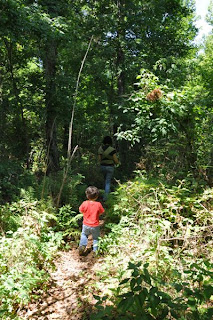 |
| Exploring the wooded trails |
We explored it all, touring the gallery of art work and trying our hand at making clay roots for a communal tree sculpture. For Charles, the highlight of his “adventure” was the cicada shell we found during our walk in the woods. He had brought along his bug catcher and was begging me to snag him a spider, but fortunately Paul satisfied him by finding the unoccupied shell clinging to a nearby tree.
August, on the other hand, simply took it all in, enjoying the day as much as any other. It was a nice, small outing, offering an enclosed space large enough to explore, but small enough to not worry about keeping tabs on your kid every second. On our way out, we admired the steel gates gracing the entrance before crossing the street and scaling the levee to take in the record-high waters of the Mississippi River.
 |
| Steel gates guarding the entrance |

by admin | May 12, 2011 | Greater New Orleans
It was a typical morning, only 7:30 a.m. and Charles’ three-foot, stuffed T-Rex had already tried to eat August and had succeeded in eating his yogurt snacks. I had my exercise in for the day after chasing the squealing 3-year-old around the house in my desperate attempt to get him dressed, and somehow my basket of folded, clean laundry was now scattered across the kitchen floor. As I put my head down on the table, I found myself staring at three tiny snails and a shriveled up millipede that Charles so eloquently described as “broken.”
I knew we needed a plan to leave the house and fast, but we were still tired from our previous weekend in Lafayette and weren’t willing to venture too far. Paul and I scanned our mental list of things we needed to see in New Orleans and came up with Longue Vue House and Gardens. Both of us had worked in Old Metairie at one time or another and thus had passed the entrance to the house hundreds of times. Yet, the small sign from the road never seemed to promise anything special, and we simply overlooked the place for years. Boy, were we mistaken.
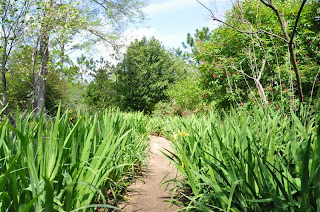 |
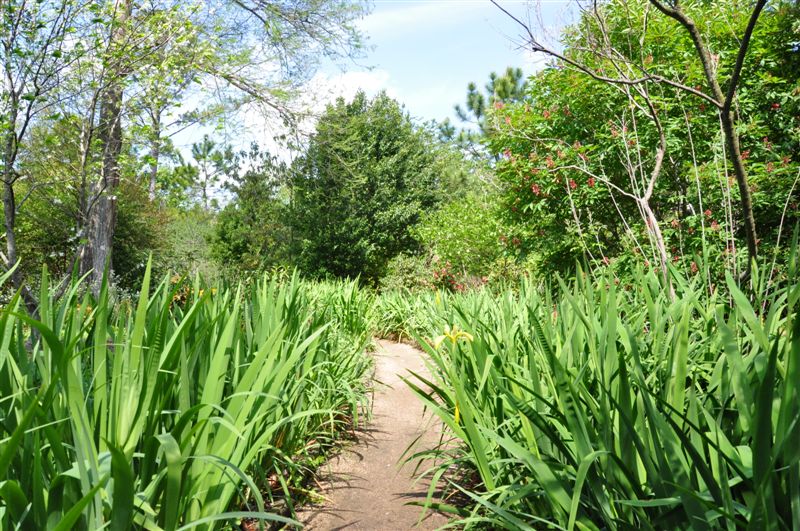
| Iris-lined path in the Wild Garden |
Even the entrance, with its view down an oak alley to the main house, belied nothing more than a mansion with a great lawn. But we paid our entrance fee and carefully drove down a two-way, one-lane road to the parking lot. Taking my first glance at the map, I was surprised to see seven different gardens listed as well as a Spanish Court and the oak alley.
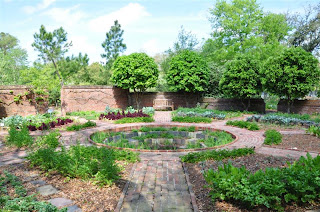 |
| The herbs and vegetables of the Walled Garden |
We started in the Wild Garden, where butterflies flitted from one native plant to the next. Camellias, azaleas, irises, wildflowers and dozens of other plants and trees filled the area, with walking paths snaking between them and around the pond leading to the Pigeonnier. A small entrance then led you from the whimsical garden inside the symmetrical walls of a kitchen garden lined with herbs, fruits and vegetables.
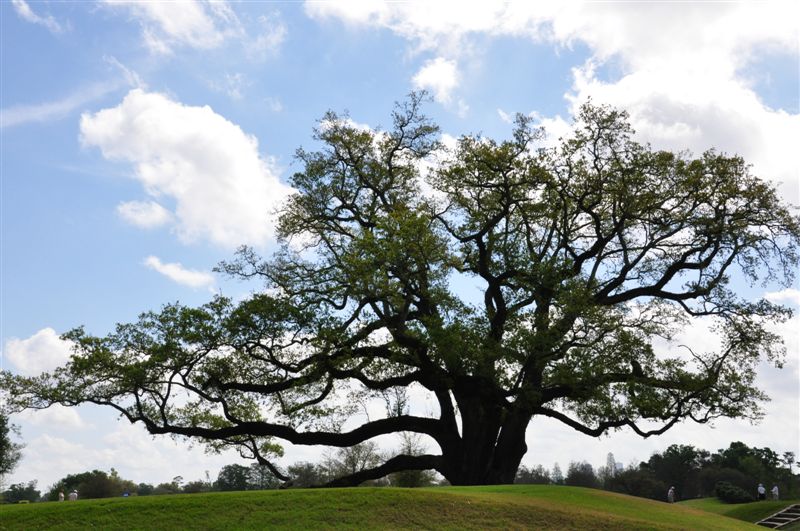
Water was a central component of both the Canal and Pond Gardens, which fittingly ended with a colorful, wooden sculpture of a wave. The boundary lines were blurred between Longue Vue’s East Lawn and the New Orleans Country Club, and I experienced a brief moment of confusion after emerging from meticulous gardens to see a man-made hill acting as a buffer to flying golf balls. Live oak trees with expansive spreads graced the edges of the property.
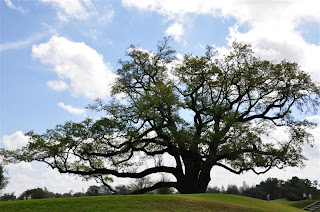 |
| A majestic live oak on the edge of the golf course |
The pebble and water marvel Spanish Court offered a stylish walk to the edge of the house, which we forewent touring with two small children. Thinking our tour was nearly over, we passed through a few smaller gardens to take a peak at the Discovery Garden before heading back to the car. Little did we know, this was to be the highlight of our trip.
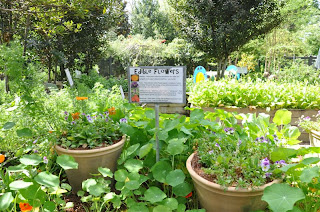 |
| Edible flowers in the Discovery Garden |
One of the largest landscaped areas on the property, this was a child’s dream come true. Every corner revealed a new surprise, from child-sized binoculars, shovels, trowels and even wheelbarrows to secret pathways, planting areas and worm digs. Charles enjoyed every inch of the property, exploring its full potential not once but multiple times. Our quick and easy trip turned into hours of enjoyment, and we made sure to pick up the brochure about birthday parties on our way out.

by admin | May 6, 2011 | Cajun Country
Every year during Jazz Fest, our neighbors are talking about another festival — the Festival International de Louisiane in downtown Lafayette. It didn’t take much convincing for us to get on the road and use this as our excuse to visit the heart of Cajun land.
Despite leaving work early, the four of us and half our house crawled out of the city in rush hour traffic only to sit in Metairie’s infamous traffic jam. I’ve tried my best to block out the evening’s travels, but I vaguely remember a lot of crying coming from two exhausted, yet stubbornly refusing-to-take-a-nap children. By the time we hit Baton Rouge, I swear the car stopped itself and kicked us out on the curb. The next 15 minutes were spent scarfing down Cane’s chicken fingers while our 9-month-old August played his favorite game of beating the table and his older brother Charles breakdanced across the floor.
 |
| Statue of Mike the Tiger at Louisiana State University |
Luckily, the evening wasn’t a complete wash. A quick stop to see LSU‘s Mike the Tiger paid off when the bengal tiger put on an elaborate show of racing around his cage and trying to climb a tree. And then, when dark set in and we got back on the road, our two little angels passed out. We pulled into our friends’ driveway in Carencro with a sigh of relief, plopping both kids in bed and settling down to visit with real adults while watching highlights of the Royal Wedding.
 |
| Musical instruments at the Acadian Cultural Center |
The next morning was overcast and drizzly so we decided to stop by an indoor spot before attempting the outdoor festival. The Acadian Cultural Center, Jean Lafitte National Park’s Lafayette site, details the history of the Acadians, many of whom settled in south Louisiana after being exiled from Nova Scotia. The French-speaking Acadians became today’s Cajuns, known world-wide for their food and music. A movie and extensive exhibits showcased their culture, while a reconstructed Cajun-Creole settlement sat down the road at Vermilionville. Time and weather didn’t permit us to visit the living history museum, but it certainly made my list for a future visit.
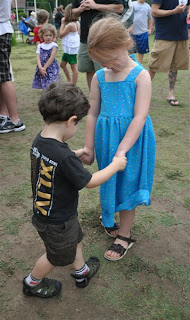 |
| Dancing to the music |
Although it was still misting, we couldn’t prolong the festival anymore. Parking downtown, we grabbed our umbrellas and strollers (our friends had two small children as well) and went straight for the festival food, deciding on fried catfish served over rice and smothered in a spicy crawfish etouffee. With six music stages, countless arts and crafts booths, food courts and street musicians, the free-of-charge International Festival sprawls across the historic streets of downtown Lafayette. Musicians from around the world come to play at the five-day festival, and we saw everything from Native American flute players and African drummers to the next child star singing Cajun music. We eventually made our way to the well-hidden children’s section, which turned out to be an enormous fenced-in area with multiple playgrounds, piles of hoola hoops and giant bouncy balls, art activities, face painting and some of the best music at the festival.
 |
| Chretien Point plantation |
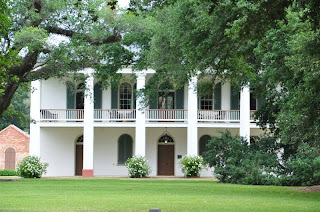
That evening, in anticipation of the next day’s activities, we treated ourselves to a second helping of crawfish — this time with pasta and delicious boudin from the local grocery store. On Sunday, we were in for a special treat. Our friend’s grandfather owns crawfish ponds in the neighboring town of Sunset, and we were going to take a ride in them. To reach the ponds, we passed Chretien Point plantation, built in 1831, often visited by Jean Lafitte the pirate and boasting a staircase made famous in “Gone with the Wind.”
 |
| A crawfish trap |
Unfortunately, it was closed for viewing, so we continued on to the ponds, where we boarded a handmade boat complete with wheels to churn through the mud. The kids marveled at the crawfish hanging out in the bottom of each trap and threw in food as we passed. As I write this blog, the scratching noise coming from my den reminds me of the souvenir crawfish Charles brought home as a pet reminder of our once in a lifetime experience.
As with all trips, we should have ended it there, but instead we decided to try out a new Mexican restaurant in town. With the arrival of the queso dip appetizer, Charles’ hungry fingers dragged the bowl closer — just in front of August’s face, whose chubby little hands took one swift moment to dump the entire contents all over himself. And so we bid farewell to our friends, promising to return again as we had so much more of the area to discover.